Cooking Courses in Mumbai - Professional Cooking Classes in Mumbai – Culinary Craft
Culinary Craft provides the best cooking courses in Mumbai. It conducts professional cooking classes that teach people how to serve marvelous experiences on a plate.
Cooking courses in Mumbai teach professional and home chefs essential culinary skills such as knife techniques, baking, international cuisines, and food presentation. Top institutes include the Culinary Craft. Course durations range from 1-week workshops to 1-year diploma programs.
Cooking classes in Mumbai offer hands-on training in Indian, continental, and baking cuisines for beginners and professionals. Popular options include Culinary Craft. Class durations range from single-day workshops to 6-month certificate courses focused on technique and presentation.
Baking courses in Mumbai teach pastry, bread, and dessert-making skills for hobbyists and professionals. Leading institutes include Culinary Craft. Course durations vary from weekend workshops to 1-year advanced diplomas that cover artisan baking, patisserie, and cake decoration techniques.
Baking classes in Mumbai provide hands-on training in cakes, pastries, cookies, and bread-making. Top institutes include Culinary Craft. Classes range from one-day workshops to 6-month certificate programs, teaching both beginner and advanced baking techniques.
Culinary classes in Mumbai train students in cooking fundamentals, global cuisines, and professional kitchen management. Renowned institutes include Culinary Craft. Course options range from weekend workshops to 1-year diploma programs designed for aspiring chefs and culinary entrepreneurs.
Part-time culinary courses in Mumbai offer flexible training in cooking, baking, and international cuisines for working professionals. Top institutes include Culinary Craft. Course durations range from 4-week evening batches to 6-month weekend programs focused on practical kitchen skills.
Professional cooking classes in Mumbai provide chef-level training in advanced culinary techniques, menu planning, and kitchen management. Leading institutes include Cuilinary Craft. Courses range from 3-month professional certificates to 1-year diploma programs that prepare students for careers in hospitality.
Weekend baking classes offer flexible training in cakes, breads, pastries, and desserts for hobbyists and aspiring bakers. Popular institutes include Culinary Craft. Classes typically run on Saturdays and Sundays, lasting from 2 hours to 8 weeks, depending on course level.
Cake baking classes in Mumbai teach essential skills in sponge preparation, frosting, fondant work, and cake decoration. Leading institutes include Culinary Craft. Courses range from 1-day workshops to 3-month certification programs suitable for beginners and professional bakers.
Chef courses in Mumbai provide professional culinary training in cooking techniques, kitchen operations, and global cuisines. Top institutes include Culinary Craft. Programs range from 6-month diplomas to 2-year advanced chef certifications designed for hospitality and restaurant careers.
Private cooking parties offer interactive culinary experiences for groups celebrating birthdays, team events, or social gatherings. Professional chefs guide participants in preparing multi-course meals or themed cuisines. Sessions typically last 2–4 hours and include all ingredients, equipment, and personalized instruction.
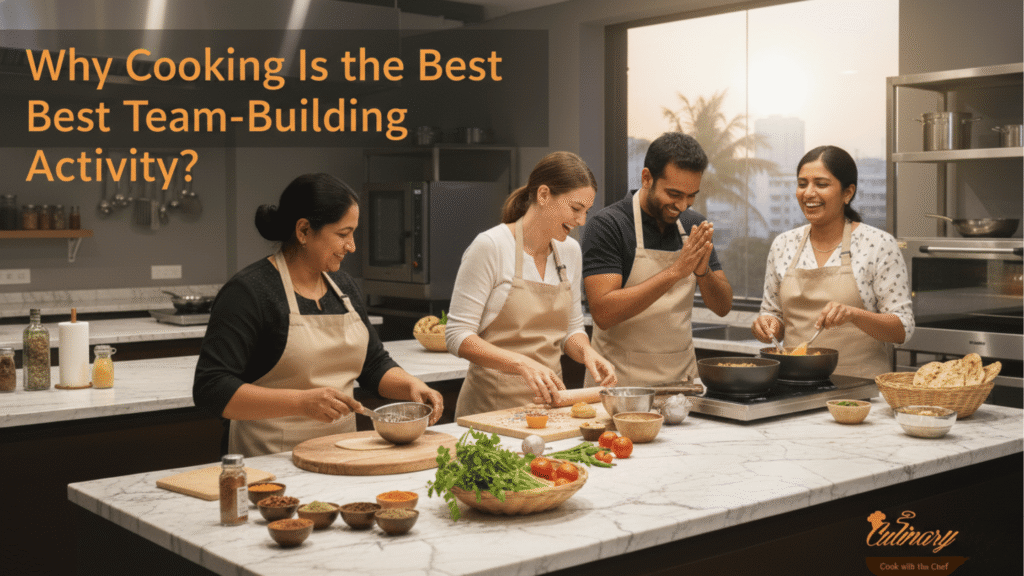
Team building through cooking strengthens collaboration, communication, and problem-solving skills among employees. Cooking challenges and group meal preparations promote teamwork in a relaxed, creative setting. Companies often host these sessions in culinary studios or offsite venues for 2–3 hours to enhance workplace bonding.
A cooking class corporate event combines culinary training with team-building activities for employees. Professional chefs lead groups through recipe creation, time challenges, and tasting sessions. Events typically last 2–4 hours and help improve teamwork, communication, and creativity in a fun, interactive environment.
Cooking classes for foreigners introduce participants to authentic local cuisines and cultural food traditions. Professional chefs guide students through market tours, ingredient selection, and hands-on recipe preparation. Classes typically last 2–5 hours and offer an immersive experience in regional cooking styles and flavors.
Cooking for your date creates a personal and romantic experience that shows effort and thoughtfulness. Choose a simple menu, prepare in advance, and focus on presentation. Dishes like pasta, risotto, or chocolate desserts work well for two, allowing time to cook together and enjoy the meal.
Kids cooking classes in Mumbai teach children basic culinary skills, kitchen safety, and healthy eating habits. Popular institutes include Culinary Craft. Classes run as weekend workshops or short-term courses for ages 6 to 15, promoting creativity and confidence.
Private cooking sessions for kitty parties offer a fun and interactive culinary experience for small groups. Professional chefs guide participants in preparing themed dishes such as Italian, Indian, or desserts. Sessions typically last 2–3 hours and include all ingredients, equipment, and personalized instruction.
Government-certified baking courses in Mumbai provide accredited training in pastry, bread, and cake-making techniques. Recognized institutes include Culinary Craft. Programs range from 6-month certificates to 1-year diplomas approved by government bodies like NSDC and FSSAI.
A Diploma in Bakery and Pastry trains students in professional baking, confectionery, and dessert presentation techniques. The course covers bread making, patisserie, chocolate work, and cake decoration. Institutes like Culinary Craft offer 6-month to 1-year diploma programs recognized by global culinary bodies.
A sushi-making course teaches the art of preparing traditional Japanese sushi, including rice seasoning, rolling techniques, and knife skills. Classes cover maki, nigiri, and sashimi preparation. Institutes like Culinary Craft offer 1-day workshops to 4-week certificate programs for beginners and professionals.
Weekend cooking classes offer flexible schedules for beginners and professionals to learn global cuisines, baking, and meal preparation. Institutes like Culinary Craft conduct 1-day to 8-week programs. These classes focus on practical, hands-on training suited for busy individuals.
Professional Cooking Classes and Course in Mumbai | Advanced Cooking Classes and Cookery Course
Cities we cater Become a professional baker in India: Mumbai: South Mumbai, Colaba, Fort, Nariman Point, Worli, Lower Parel, Prabhadevi, Dadar, Matunga, Wadala, Kurla, Chembur, Bandra West, Bandra East, Khar, Santacruz, Andheri West, Andheri East, Juhu, Vile Parle, Malad, Goregaon, Borivali, Dahisar, Kandivali, Borivali West, Borivali East, Sion, Ghatkopar, Powai, Vikhroli, Kanjurmarg, Bhandup, Mulund, Kurla (Eastern Suburbs)
Thane / Kalyan / surrounding: Thane East, Thane West, Majiwada, Ghodbunder Road, Kolshet, Balkum, Kalwa, Kopri, Ulhasnagar, Bhiwandi, Ambernath, Badlapur, Kalyan, Dombivli, Shahad, Ulhasnagar, Ambarnath, Bhiwandi, Murbad
Navi Mumbai: Airoli, Ghansoli, Kopar Khairane, Vashi, Turbhe, Sanpada, Nerul, Seawoods, CBD Belapur, Kharghar, Kamothe, Ulwe, Kalamboli, Panvel, Taloja, Dronagiri, Juinagar
Q: What types of professional certifications are offered at Culinary Craft?
A: Culinary Craft offers several high-value certifications, including the UK Certified Diploma and the Government Certified Course in Baking. We also provide various other certified cooking and baking courses recognized in Mumbai.
Q: Where are the cooking classes located in Mumbai?
A: Culinary Craft is conveniently located in Powai, Mumbai. Our address is 220/247/248, 2nd Floor, Powai Plaza, Hiranandani Powai, Mumbai-400076.
Q: Are the courses primarily hands-on, or are they demonstration-based?
A: Our classes emphasize hands-on practice, allowing students to dive into the art of culinary and bakery perfection where every recipe comes to life under your expert touch. We also offer Interactive Demonstrations perfect for groups who want to watch, learn, and taste.
Q: What variety of international and Indian cuisines are taught in your programs?
A: We offer extensive training across various global cuisines, including Chinese, Mughlai, Mexican, Italian, Mediterranean, and Continental. We also specialize in providing an authentic Indian cuisine experience, particularly tailored for expats.
Q: What features make the Culinary Craft studio a state-of-the-art learning environment?
A: Our studio is equipped with high-end equipment, including precision ovens and advanced tools, designed to enhance learning. We also ensure that only the highest quality, carefully selected ingredients are utilized in every class for an exceptional culinary experience.
Q: I am a complete beginner; is Culinary Craft still suitable for me?
A: Absolutely. Our cooking courses are designed to make learning simple and enjoyable for everyone, including those with no prior experience. Our small class sizes ensure step-by-step guidance to help you unlock your inner MasterChef.
Q: What types of group experiences and private parties does Culinary Craft host?
A: We host a wide range of culinary experiences perfect for groups, including Corporate Team Building activities, Private Cooking Parties, Date Nights, Kitty Parties, and specialized cooking birthday parties for kids.
cooking courses in mumbai, cooking classes mumbai, baking courses in mumbai, baking classes mumbai, culinary classes in mumbai, part time culinary courses in mumbai, professional cooking classes in mumbai, weekend baking classes, cake baking classes in mumbai, chef courses in mumbai, private cooking parties, team building through cooking, cooking class corporate event, cooking class for foreigners, cooking for your date, kids cooking classes in mumbai, private cooking for kitty party, government certified baking courses in mumbai, diploma bakery and pastry, sushi making course, weekend cooking classes
cooking classes in mumbai, baking classes in mumbai, chef course in mumbai, government certified cooking course, government certified baking course, vegetarian cooking course in mumbai, eggless baking course, artisanal bread making course, crash course in cooking, one day cooking workshop mumbai, pizza making class in mumbai, sushi making course in mumbai, korean cooking class in mumbai, dimsum making workshop, brownies baking class, cookies baking workshop, cheesecake making class, healthy salad workshop, cooking for couples mumbai, corporate team building cooking class, private cooking party mumbai, entrepreneurship course for bakers, business course for cloud kitchen, how to start a food business in india, short term cooking course in mumbai, weekend cooking classes in mumbai, professional baking course mumbai, chef training institute in mumbai, certified cooking course india, vegetarian chef course
Offer a chef course in Mumbai to train students in professional cooking techniques, kitchen operations, menu planning, and global culinary skills through structured, hands-on instruction.
Offer a government-certified cooking course to train students in standardized culinary skills, food safety practices, and professional kitchen operations while providing an officially recognized certification.
Offer a government-certified baking course to train students in foundational and advanced baking techniques, food safety standards, and professional kitchen practices while awarding an officially recognized certification.
Offer a vegetarian cooking course in Mumbai to teach students plant-based cooking techniques, regional Indian recipes, and nutrition principles through structured, hands-on sessions.
Offer an eggless baking course to teach students egg-free baking techniques, recipe substitutes, and professional methods for cakes, breads, and desserts through structured, hands-on training.
Offer an artisanal bread-making course to teach students traditional fermentation methods, sourdough techniques, shaping skills, and baking science through structured, hands-on training.
Offer a crash course in cooking to teach beginners essential techniques, quick meal prep skills, and core culinary fundamentals through short, intensive, hands-on sessions.
Run a dim sum–making workshop to teach participants traditional folding techniques, dough preparation, steaming methods, and recipe variations through guided, hands-on practice.
Offer a pizza-making class in Mumbai to teach participants dough preparation, sauce building, topping combinations, and baking techniques through guided, hands-on sessions.
A sushi-making course in Mumbai teaches sushi rice preparation, knife skills, and maki or nigiri techniques in 2–6 hour sessions. Local cooking schools and Japanese restaurants in Mumbai offer beginner and advanced classes that provide hands-on training and ingredient guidance.
A Korean cooking class in Mumbai teaches kimchi preparation, Korean BBQ basics, and staple dishes like bibimbap or tteokbokki in 2–4 hour sessions. Culinary studios and Korean restaurants in Mumbai offer hands-on classes that guide students through ingredients, techniques, and authentic flavor building.
A brownies baking class teaches step-by-step techniques for mixing, folding, and baking fudgy or cakey brownies in 1–3 hour sessions. Baking studios and home-chef workshops offer hands-on guidance that covers ingredient ratios, chocolate melting, and temperature control for consistent results.
A cookies baking workshop teaches mixing, shaping, and baking techniques in 1–3 hour sessions. Baking studios and home bakers offer hands-on instruction that covers dough consistency, ingredient ratios, and temperature control to help participants bake uniform and flavorful cookies.
A cheesecake making class teaches mixing, whipping, and baking techniques for classic and no-bake cheesecakes in 1–3 hour sessions. Baking studios and culinary workshops provide hands-on guidance on crust preparation, cream cheese ratios, and temperature control to create smooth and stable cheesecakes.
A healthy salad workshop teaches ingredient prep, nutrient balancing, and dressing techniques in 1–2 hour sessions. Culinary studios and nutrition-focused instructors offer hands-on guidance that covers chopping skills, portion control, and flavor pairing to help participants create balanced and fresh salads.
A cooking-for-couples class in Mumbai teaches partners how to cook coordinated dishes in 1–3 hour sessions. Culinary studios and private chefs offer hands-on guidance that covers teamwork, plating, and flavor pairing to help couples create shared meals and improve kitchen skills together.
A corporate team-building cooking class teaches teams how to collaborate through shared meal preparation in 2–4 hour sessions. Culinary studios and corporate facilitators offer hands-on activities that build communication, task coordination, and problem-solving while teams cook structured recipes together.
A private cooking party in Mumbai offers a customized cooking experience for small groups in 2–4 hour sessions. Culinary studios and private chefs host interactive events that include menu planning, hands-on cooking, and plated dining to create a social and personalized food experience.
An entrepreneurship course for bakers teaches pricing, branding, menu costing, and bakery business planning in 4–12 week programs. Culinary institutes and business coaches offer structured lessons that cover marketing, sales systems, and production management to help bakers launch and scale profitable bakery businesses.
A business course for a cloud kitchen teaches menu costing, delivery logistics, branding, and operational systems in 4–12 week programs. Culinary academies and food-business coaches offer structured training that covers pricing models, supply-chain planning, and digital marketing to help owners launch and scale profitable cloud kitchens.
Start a food business in India by registering your business, obtaining an FSSAI license, and setting up GST, shop establishment, and fire-safety approvals. Create a menu, build a supply chain, and set up production and delivery systems. Launch the business with pricing, branding, and digital marketing.
A short-term cooking course in Mumbai teaches core cooking skills in 1–4 week programs. Culinary studios and cooking academies offer fast-track modules that cover knife skills, meal prep, sauces, baking basics, and regional cuisines to help beginners build confidence in a structured, hands-on format.
Weekend cooking classes in Mumbai teach beginners and hobby cooks essential skills through 2–4 hour sessions. Culinary studios and cooking schools offer hands-on modules that cover knife skills, meal prep, baking basics, and global cuisines to help students learn practical techniques in a flexible weekend format.
A chef training institute in Mumbai offers professional culinary programs that teach knife skills, cooking techniques, kitchen management, and food safety over 6–12 month courses. Culinary academies provide practical training in hot kitchen, bakery, and international cuisines to prepare students for restaurant and hotel careers.
A certified cooking course in India offers accredited culinary training that covers knife skills, cooking methods, baking, food safety, and kitchen management over 3–12 month programs. Culinary institutes and hospitality schools provide practical exams and recognized certifications that help students qualify for professional kitchen roles.
A vegetarian chef course teaches plant-based cooking techniques, menu planning, nutrition basics, and global vegetarian cuisines over 1–6 month programs. Culinary institutes and cooking academies provide hands-on training in salads, soups, mains, and desserts to prepare students for professional vegetarian kitchen roles.