
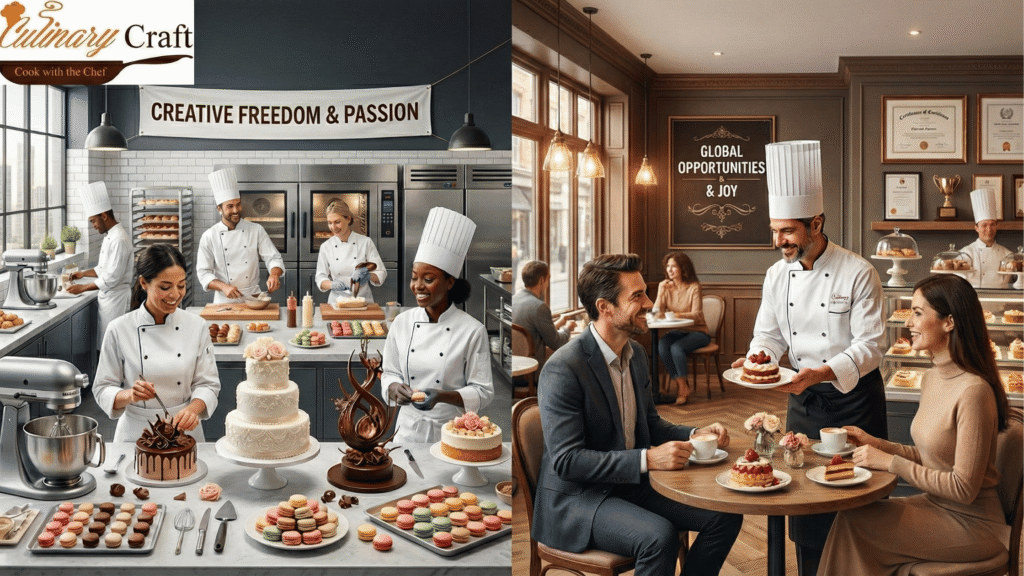
If you are planning to step into the food industry, one question will definitely trouble you in the beginning. Which culinary career path should you actually choose? The choices available nowadays are so numerous that it does not seem easy to make a choice. Other students would like to become head chefs in the busy restaurant kitchens. Others feel more connected to desserts, chocolates, and artistic presentation. That is when the question naturally appears in your mind, is pastry chef a good career for long-term growth? Many people still believe it is only about baking sweets, but pastry chef career benefits include creativity along with technical mastery. At Culinary Craft in Powai, students experience real kitchen exposure before deciding seriously. Taking time to understand the role properly always makes the final decision much easier.
What a Pastry Chef Really Does
Most people assume that a pastry chef spends the day simply baking cakes and cookies. As soon as you look at a real kitchen in action, you will see that the pastry chef position is much more stratified. A pastry chef prepares desserts, breads, plated desserts and specialty items which involve patience and a steady hand. Every recipe has to be followed carefully because balance in flavour and texture matters a lot. The pastry chef responsibilities also include planning combinations that taste good and look refined on the plate. It is a job that blends accuracy with creativity in equal measure.
On an ordinary day, a pastry chef is usually involved in work such as:
- Decision making on the dessert menus that are in line with the restaurant’s style and customers.
- Preparation of various types of breads and pastries and consistency in each production.
- Filling creams and designs in a neat and professional way so that presentation is not blurred.
- Sugarcraft and chocolate embellishing to perfect finishing.
At Culinary Craft, students step into a structured culinary studio experience from the very beginning. They practise these same tasks in a real kitchen environment so that learning feels practical and clear.
High Demand Across Diverse Culinary Spaces
Consider the last occasion when you had dinner out. Before the meal was even over, you were likely to have talked about the dessert. That in itself tells you that something has changed. Desserts are not a sweet finish anymore. They are the talk of the town in most locations.
When customers begin to care this much, businesses respond quickly. That is one reason pastry chef demand has increased in a very real way. Hotels, cafes, and restaurants are not able to overlook the expectations of guests. With the growing expectations, the number of culinary opportunities is starting to open up to trained professionals. When you stop and think about baking career opportunities nowadays, you will find that there is much more of a variety of choices than before.
A pastry chef can build a career in places such as:
- Boutique cafés that prepare fresh desserts daily and depend on repeat customers
- Fine dining restaurants where the final course must feel thoughtful and complete.
- Established hotel kitchens that run full pastry sections alongside main operations.
- Luxury resorts where guests expect premium sweets at every service.
- Independent patisseries that create their own identity through signature offerings.
- Event catering companies that manage desserts for weddings and large celebrations.
At Culinary Craft, students regularly meet small business bakers and working professionals during workshops. These sessions are not just demonstrations. They give students a direct look at how strong and steady the market demand actually is.
Benefit 1: Artistic Creativity Meets Precision
Some people enjoy structure. Some people enjoy creativity. A creative pastry career quietly demands both at the same time. You may begin with an idea in your head, perhaps a plated dessert that looks simple. But once you start working, you realise how exact everything needs to be. Balance of flavours is time-consuming. The slightest addition of sugar or the slightest change of the texture may change the entire experience. It is not just about how to make a dessert pretty. It is everything to make sure that it is as good as it appears. That is where artistic culinary expression becomes serious work. At Culinary Craft, students are not told to memorise and move on. They try, adjust, taste again, and learn through practice. That process builds confidence in a very real way.
Benefit 2: Continuous Skills Growth and Learning
There is no end point in this profession where you feel that you are fully done. The development of culinary skills is slow and silent. A pastry chef can master a simple sponge today and come back to it the following month. Baking is a skill that gets better with practice, and minor adjustments can be seen. There are days of learning sugar work. Other holidays are concerned with learning about local delicacies or following international fashions. Learning is not an activity that happens in isolation. In Culinary Craft, the students switch between basic skills and advanced skills based on their comfort level. They are given the freedom to repeat, correct and improve without being pressured. That gradual learning makes the work interesting and confidence continues to increase.
Benefit 3: Professional Advancement and Recognition
When individuals inquire about long-term stability, they tend to seek to know what is in store. A pastry kitchen is not a place where you stay in one position. The career development of a pastry chef is typically based on a practical and obvious ladder. You can start by helping with the preparation and basic baking.
With time, responsibility increases. Your confidence grows, and so does your position. The chef career path in this field allows steady movement if skills improve consistently. Recognition does not happen overnight, but it does happen. Culinary certification value also becomes important at this stage because structured training adds credibility. Programmes similar to the professional approach seen at Culinary Craft help strengthen that foundation.
Benefit 4: Rewarding Work Environment
Not every career gives you the chance to see someone smile because of your work. In a satisfied culinary career, that moment happens more often than you expect. Watching a guest enjoy a dessert you prepared brings a quiet sense of achievement. Pastry chef work satisfaction also comes from mastering something that once felt difficult. There is pride in perfecting a technique after repeated attempts. Kitchens are collaborative spaces where learning happens through teamwork. That shared energy creates strong professional bonds. At Culinary Craft, learners are guided within a supportive environment where mistakes are treated as part of growth. The chef’s lifestyle benefits are not only financial. They are personal, creative, and deeply fulfilling.
Conclusion
After looking at the benefits and realities, the question still remains, is pastry chef a good career for you? The answer depends on your patience, creativity, and willingness to grow. The decision of a pastry chef cannot be made in a hurry without knowing the daily duties. This food profession may be very fulfilling to individuals who like accuracy and artistry combined. It provides development, appreciation, and self-fulfilment. Simultaneously, it demands discipline and strength. Before making a full commitment, test it in actual studio environments. Academies like Culinary Craft allow learners to explore confidently and make informed decisions about their future.
FAQs
- Is a pastry chef a good long term stable career?
This career can provide gradual growth, provided that you are ready to be regular and continue to improve your abilities. There is also a growing demand for skilled dessert professionals, particularly in hotels, cafes, and specialised bakeries in various cities. - What is the duration of becoming a professional pastry chef?
Your training route and practice will determine the plan. Others start with brief workshops, and others opt to undertake certified programmes. Through practice and internship, one can observe that it can be improved in a year or two. - Am I required to have professional training in cooking to be successful?
Although there are individuals who learn informally, formal training can offer better basics. The science of baking, hygiene, and kitchen discipline is taught in professional classes and cannot be easily taught using online videos. - What are the most significant problems in the career of a pastry chef?
The initial modifications, increased hours, and accuracy in stressful circumstances may not be easy initially. Physical strength is also significant as the work in the kitchen requires standing for long hours and paying attention to the specifics of the preparation process. - Is it possible to become a pastry chef when changing professions?
Yes, there are numerous professionals who switch to baking after finding a true interest. You can begin with introductory workshops or weekend courses to see how committed you are before you commit to full-time culinary training programmes.