
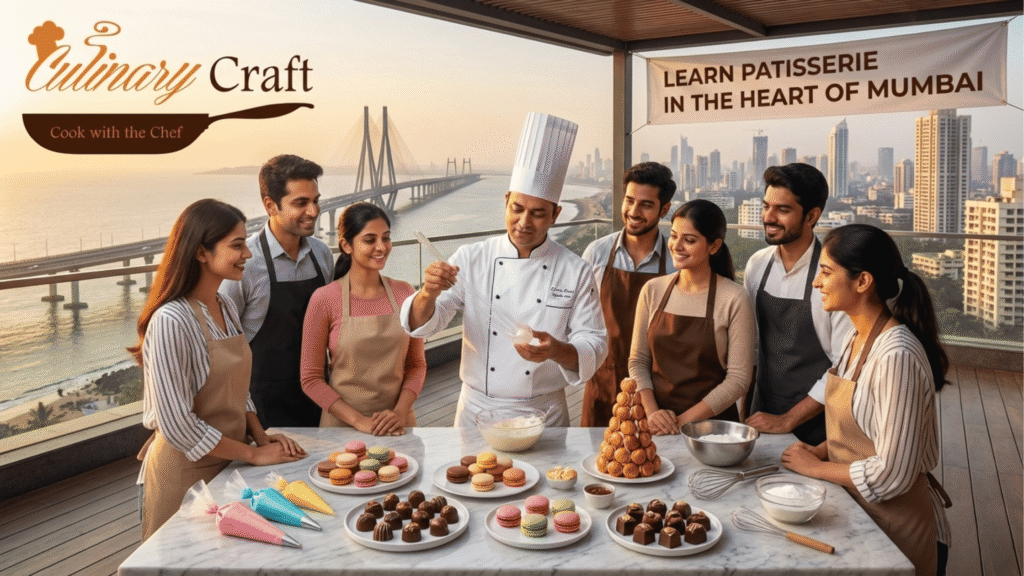
Mumbai has always attracted people who want to build something of their own. Most come for finance or film, yet the food industry is now drawing the same ambition. As restaurants multiplied and café culture expanded, the city’s expectations of culinary professionals also increased.
With that shift, informal learning stopped being enough. Many aspiring chefs began looking for structured education that could match the city’s pace. That is where a Diploma in Patisserie Mumbai started gaining relevance. It offers direction in a market that values both creativity and precision.
At the same time, professional Culinary training in Mumbai began aligning itself with global kitchen standards. Students who join a serious course in Baking and Patisserie do not want simple training anymore. This change can be observed in institutes like Culinary Craft in Powai, which offer skill-based and focused programs. Due to this ecosystem, Mumbai is more of a city option rather than a sensible beginning to a pastry career.
The Flourishing Bakery and Café Culture in Mumbai
The food culture of Mumbai has been transformed in apparent ways. In the last ten years, the choice of desserts was predictable and small. The city today is a representation of a robust and growing Bakery culture Mumbai influenced through experimentation and demand.
Walk through Bandra on a weekend and the cafés are full. Visit Powai or Lower Parel and dessert counters display plated creations that match international standards. These shifts are not random. They reflect changing dessert trends in Mumbai where presentation, texture, and flavour balance matter as much as taste.
This movement is supported by different types of establishments:
- Boutique cake studios.
- Sugar-free and healthy dessert spots.
- Pastry corners in multi-cuisine cafés.
As this environment grows, skill requirements grow with it. That is why Patisserie workshops Powai have gained attention among aspiring bakers. Culinary Craft contributes through structured sessions on eggless fondant techniques and regional sweet applications. Training and market demand are now moving in the same direction.
A Learning Environment Built for Practice, Not Just Theory
Patisserie is a skill that develops in the kitchen, not in a notebook. Reading about technique does not create control over dough or chocolate. Control comes from repetition and correction. That is why Hands-on patisserie training matters in a serious programme.
Inside a working Baking studio Mumbai, students stand at their stations and prepare recipes themselves. They handle ingredients, manage timing, and adjust texture as required. Mistakes are addressed immediately, which strengthens understanding.
The Culinary Craft workshop approach follows this structure. Participants bake during every session rather than observe passively. They repeat processes until movements become natural. This rhythm mirrors the pace of professional hotel kitchens and established bakery brands. Practice becomes preparation for real responsibility.
Professional-Grade Kitchen Studios and Resources
The quality of space influences the quality of learning. A dedicated Culinary studio Powai offers more than basic classroom facilities. It operates like a compact commercial kitchen.
Students work with Professional baking amenities that resemble those used in established bakeries. They learn how ovens respond to temperature shifts and how equipment must be handled with care. This exposure builds operational discipline.
Through structured Mumbai kitchen training, learners understand workflow from preparation to plating. They follow hygiene standards and manage ingredients correctly. This familiarity reduces uncertainty when they step into larger professional kitchens.
Exposure to Global Techniques and Regional Flavours
Mumbai’s food scene brings multiple traditions into one working space. A single dessert menu may carry European classics and Indian inspirations together. This setting introduces students to Global patisserie techniques while keeping them connected to familiar flavours.
In the same training cycle, learners may practise laminated dough and also explore elements of Indian dessert mastering. This balance reflects the reality of a Multi-cuisine baking Mumbai environment where customers expect variety. Exposure to contrast builds adaptability.
| Focus Area | Example | Learning Benefit |
| French Pastries | Croissants, tarts | Understand structured European technique |
| Indian Desserts | Mithai influences | Develop fusion-based flavour thinking |
| Healthy Desserts | Sugar-free sweets | Respond to current dietary preferences |
Culinary Craft aligns with this diversity through workshops on sugar-free Indian desserts and international patisserie modules. Students, therefore, train within the same range they see in the market.
Flexible Learning Pathways for Every Aspirant
Culinary education does not follow one fixed route. Some learners seek depth over several months, while others look for focused skill upgrades. A clear Diploma and workshop structure make both possible.
In Mumbai, options range from One-day baking classes in Powai to extended certification programmes. Short sessions allow working individuals to test their interest without long commitments. Longer formats, such as a Certified patisserie course in Mumbai, provide structured progression and assessment.
Culinary Craft combines both models within one framework. The Advanced Culinary and Patisserie Arts diploma is accompanied by workshops on particular topics. This flexibility helps students, professionals, and entrepreneurs who have to combine training with other duties.
Mumbai’s Hospitality Ecosystem and Networking Advantage
Mumbai’s food economy moves at a fast pace. The Hospitality industry in Mumbai stretches from established five-star hotels to independent dessert labels. This density creates steady interaction between learners and working professionals.
Students training in the city often attend live demonstrations and collaborative kitchen sessions. Corporate cooking events and team-based formats further expand Culinary networking opportunities. These settings allow conversations that rarely happen inside a closed classroom.
Such exposure directly influences Patisserie careers in Mumbai. Many roles are secured through referrals and professional familiarity. In Mumbai, progress depends on participation within the ecosystem rather than waiting for isolated job openings.
Social and Experiential Growth Through Events and Workshops
In Mumbai, learning often continues after formal sessions end. The city supports Experiential cooking classes that focus on participation rather than instruction alone. These sessions allow individuals to cook, present, and receive feedback in real time.
Regular Community baking events also bring together people who share similar interests. Some attend to improve technique, while others join to exchange ideas. The interaction builds confidence through practice and conversation.
Many Culinary workshops in Mumbai are designed around themed evenings, private celebrations, and corporate team formats. Culinary Craft conducts structured event-based sessions that combine cooking with collaboration. Through these experiences, learning becomes social, and skills grow within a connected environment.
Conclusion: Mumbai’s Sweet Spot for Patisserie Aspirants
Mumbai offers a combination of demand, training, and exposure within one ecosystem. A Diploma in Patisserie Mumbai fits naturally into this environment of growth. The city supports structured pathways for developing Professional baking skills with consistency.
Students benefit from access to studios that prioritise practice and operational discipline. Over time, Mumbai has positioned itself as a functioning Culinary training hub rather than a casual learning destination.
For aspiring pastry professionals, the city provides industry visibility, structured credentials, and practical readiness. Choosing Mumbai becomes a considered career step supported by infrastructure and opportunity.
FAQs
- Why is Mumbai considered suitable for patisserie studies?
Mumbai combines training access with active market demand. The city hosts established hotels, boutique bakeries, and premium cafés. Students pursuing a Diploma in Patisserie Mumbai study within this environment. Exposure to working professionals and real customer trends supports clearer career direction and practical readiness. - What does a patisserie diploma typically include?
A structured programme covers baking fundamentals, dough science, dessert plating, and hygiene discipline. Students practise repeatedly under supervision. Assessments are conducted in stages. This format ensures that techniques are understood through action rather than memorisation alone. - Can working professionals manage short-term baking courses?
Many institutes offer modular learning options. Weekend sessions and focused workshops reduce scheduling pressure. Learners can upgrade specific skills without leaving their jobs. This flexibility allows gradual progression toward larger certification goals. - How does certification influence employment opportunities?
Employers often prefer candidates with documented training. Recognised credentials indicate supervised practice and evaluated competence. A certified patisserie diploma reduces uncertainty during hiring decisions. It signals structured exposure to professional kitchen standards. - Does networking play a role in building a pastry career in Mumbai?
Mumbai’s hospitality sector encourages direct interaction. Demonstrations and collaborative events connect students with industry participants. Conversations during such settings often lead to internships or entry-level roles. Visibility within the ecosystem can shorten the transition from training to employment.